

Marie Skłodowska-Curie Actions
Marie Skłodowska-Curie Actions
Tue May 05 11:17:13 CEST 2026
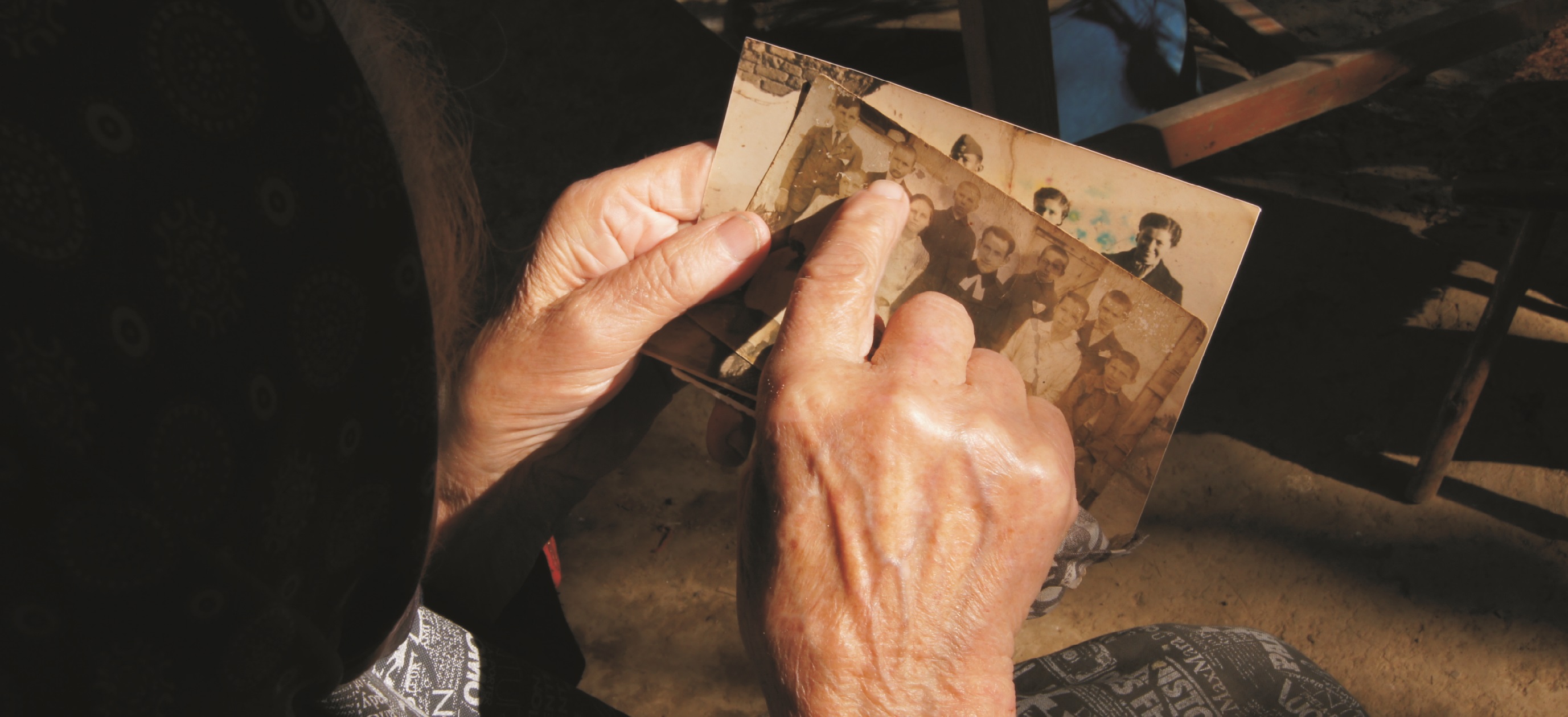
Postdoctoral Fellowships 2026 Hosting Offer, Department of Memory Studies
The Department of Memory Studies at the Institute of Ethnology of the Czech Academy of Sciences invites expressions of interest from postdoctoral researchers wishing to apply for a Marie Skłodowska-Curie Actions Postdoctoral Fellowship 2026 with the Department as host institution.
The Department welcomes candidates whose proposed projects contribute to the ethnological, anthropological, historical, or interdisciplinary study of memory, remembering, forgetting, and the public uses of the past. We are particularly interested in proposals that combine strong empirical research with theoretically ambitious approaches to memory as a cultural, social, political, and medial phenomenon.
Host institution
The Institute of Ethnology of the Czech Academy of Sciences is a public research institution conducting basic and applied research in ethnology and related disciplines, including folklore studies, social and cultural anthropology, historical anthropology, and cultural analysis. The Institute is based in Prague, with a field workplace in Brno, and forms part of the Czech Academy of Sciences.
The Department of Memory Studies focuses on the ethnological research of memory as a source for the reflection of culture, as a way of connecting past and present, and as a dynamic phenomenon shaped by social and cultural transformations. Its research addresses memory content, memory processes, media of memory, and cultures of remembering, with attention to communicative memory, cultural memory, politics of memory, institutional remembering, landscape memory, and the role of memory in contemporary social life.
Research profile of the Department
The Department’s current and future research agenda includes, among other topics:
- family memory and intergenerational transmission;
- cultures of remembering among selected social groups;
- customary and ritual culture, festivities, and vernacular practices of remembrance;
- identity formation, memory, and forgetting;
- cultural stereotypes, mental images, and representations of the past;
- landscape memory, place, place names, materiality, and memory environments;
- memory politics and the public use of the past;
- oral history, life stories, witness accounts, and the transmission of twentieth- and twenty-first-century experience.
We particularly encourage projects that are empirically grounded and methodologically reflective, including but not limited to oral history, ethnographic fieldwork, archival research, narrative analysis, discourse analysis, digital ethnography, and comparative or transnational approaches.
Possible research themes
Applicants may propose their own project, provided that it clearly fits the Department’s research profile (see https://www.eu.avcr.cz/en/about-us/departments/department-of-memory-studies/). Possible topics include, but are not limited to:
- Memory, crisis, and temporality in Central and Eastern Europe.
- Intergenerational transmission of family memory after war, displacement, migration, authoritarianism, or political transformation.
- Public memory, commemorative practices, and political uses of the past.
- Vernacular memory, everyday remembering, and oral history.
- Memory, borders, displacement, and post-imperial or post-socialist transformations.
- Landscape memory, heritage, and contested places.
- Ritual, festivity, tradition, and the transformation of cultural memory.
- Memory of minorities, marginalised groups, and social exclusion.
- Comparative memory cultures in Europe and beyond.
Projects engaging with Czechia, Central and Eastern Europe, the former Habsburg, post-socialist, or borderland contexts are especially welcome, but the Department is also open to comparative, transnational, and theoretically innovative projects with a clear relevance to memory studies.
Expected candidate profile
Candidates should:
- hold a PhD by the MSCA PF 2026 call deadline;
- have a strong research profile in memory studies, ethnology, anthropology, or related fields (history, cultural studies, folklore studies);
- demonstrate the capacity to design and carry out an independent postdoctoral research project;
- show a good publication record appropriate to career stage;
- have excellent command of English;
- be able to work in an international and interdisciplinary research environment;
- meet the MSCA Postdoctoral Fellowship eligibility and mobility rules.
Knowledge of Czech or another Central/Eastern European language may be an advantage for some projects but is not required for all proposals. Candidates must reside in the Czech Republic for the duration of the scholarship.
MSCA Postdoctoral Fellowship scheme
MSCA Postdoctoral Fellowships support excellent researchers who wish to carry out a research and training project abroad. Applications are prepared jointly by the researcher and the host institution.
European Postdoctoral Fellowships are open to researchers of any nationality moving to or within Europe. They normally last between 12 and 24 months.
Global Postdoctoral Fellowships are open to nationals or long-term residents of EU Member States or Horizon Europe Associated Countries and include an outgoing phase outside Europe followed by a mandatory return phase in Europe.
Applicants must comply with the MSCA mobility rule. For a European Postdoctoral Fellowship, researchers must not have resided or carried out their main activity, such as work or study, in Czechia for more than 12 months in the 36 months immediately before the call deadline.
For the 2026 call, the official MSCA PF deadline is 9 September 2026, 17:00 CEST.
Support offered by the Department
Selected candidates will receive support in developing a competitive MSCA PF proposal, including:
- feedback on project fit and research design;
- support in framing the project’s scientific excellence, methodology, training, and impact;
- integration into the Department’s research environment;
- advice on feasible fieldwork, archival, institutional, and collaborative arrangements in Czechia and the wider region;
- support in identifying possible secondment, placement, outreach, or dissemination partners where relevant;
- institutional guidance during the application process, in cooperation with the relevant project support office.
The successful fellow will be expected to take an active part in the intellectual life of the Department, including seminars, workshops, publications, public-facing activities, and collaborative research initiatives.
Application procedure for expressions of interest
Interested candidates should send the following documents in English:
- A curriculum vitae, including publications and research experience.
- A one- to two-page project outline, including title, research question, objectives, methodology, expected contribution, and fit with the Department of Memory Studies.
- A brief motivation statement explaining why the Institute of Ethnology CAS and the Department of Memory Studies are an appropriate host environment.
- Confirmation of PhD award date or expected PhD award date.
- A brief statement on MSCA mobility-rule eligibility.
Internal deadline
Expressions of interest should preferably be submitted by 15 May 2026, in order to allow sufficient time for project selection, proposal development, institutional review, and final submission before the MSCA deadline.
Contact
Jana Nosková, noskova@eu.cas.cz, Head of the Department of Memory Studies Institute of Ethnology of the Czech Academy of Sciences https://www.eu.avcr.cz/en/about-us/departments/department-of-memory-studies/
Please use the subject line: MSCA PF 2026 – Department of Memory Studies – Expression of Interest
Selection criteria
Expressions of interest will be assessed according to:
- scientific quality and originality of the proposed project;
- fit with the Department’s research profile;
- candidate’s track record and career stage;
- feasibility of the proposed research plan;
- potential contribution to the Department’s research environment;
- expected impact on the candidate’s career development;
- compliance with MSCA eligibility and mobility rules.
Equal opportunity statement
The Institute of Ethnology of the Czech Academy of Sciences welcomes applications from candidates of all backgrounds and encourages proposals that contribute to an inclusive, international, and interdisciplinary research environment.